


Imagine a weight loss treatment so powerful that researchers nickname it the “King Kong” of obesity drugs. Enter GLP3-RT, a next-generation weight loss peptide generating buzz for its unprecedented results. GLP3-RT is an investigational once-weekly injectable drug that helped patients shed roughly a quarter of their body weight in trials – results that approach the effectiveness of bariatric surgery. This post will break down what GLP3-RT is, how it works, and how it compares to current treatments like semaglutide and GLP2-TZ. We’ll also look at key clinical trial results, its unique multi-receptor mechanism, and when GLP3-RT might become available. If you’re curious about cutting-edge obesity treatments, read on – DT Peptides is here to help you stay informed (and yes, we plan to offer GLP3-RT once it’s approved!).
GLP3-RT is the newest weight loss peptide in development, poised to join the family of anti-obesity medications known as GLP-1 receptor agonists and related drugs. It’s being developed by Eli Lilly and is currently in Phase 3 clinical trials for obesity and type 2 diabetes. So, what is GLP3-RT exactly? It’s a single peptide that can bind to three different hormone receptors in your body – a “triple agonist” designed to mimic the effects of multiple natural hormones involved in appetite and metabolism. Specifically, GLP3-RT activates the receptors for:
In short, GLP3-RT is a triple-receptor agonist, hitting GLP-1, GIP, and glucagon receptors all at once. By engaging all three pathways, it aims to produce greater weight loss than single or dual-hormone treatments. Early evidence suggests this multi-pronged approach really pays off in terms of pounds lost – as we’ll see, the results are impressive.
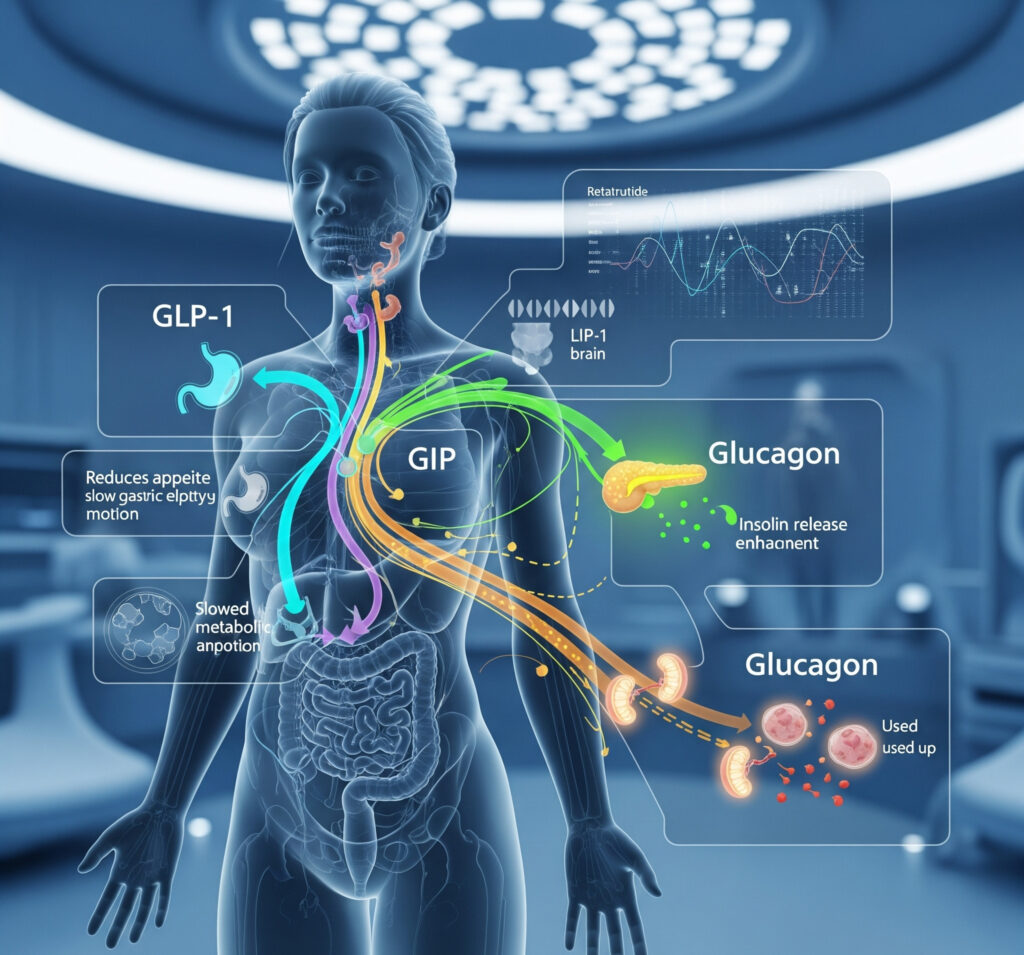
GLP3-RT’s mechanism is all about combining hormone signals to suppress appetite and boost metabolism in tandem. Each hormone receptor it activates plays a role:
This triple-action approach is what gives GLP3-RT its edge. Experts describe that the co-agonism of GLP-1 and GIP is “enhanced by glucagon receptor activation,” leading to greater weight reduction than the two hormones alone could achieve. In practical terms, GLP3-RT simultaneously curbs your appetite, keeps food in your stomach longer, improves insulin/glucose levels, and nudges your body to spend more energy. It’s a comprehensive metabolic one-two-three punch. No wonder researchers are so excited – GLP3-RT’s multi-receptor profile could be a game changer for obesity treatment.
(For a deeper dive into how GLP-1 medications affect the body, check out our post “What Does Semaglutide Do to Your Body?” on the DT Peptides blog.)
Early clinical trials of GLP3-RT have reported eye-opening weight loss results. In a Phase 2 trial published in 2023, adults with obesity who received GLP3-RT weekly for 48 weeks lost up to 24.2% of their body weight on the highest dose – nearly a quarter of their weight on average. To put that in perspective, the approved GLP-1 drugs achieved less weight loss in longer timeframes: for example, semaglutide (Wegovy) averages about 15% weight loss over ~16 months, and GLP2-TZ (Zepbound) achieved around 22.5% at 72 weeks in trials. GLP3-RT hitting 24% in under a year surpasses results seen with other weight loss drugs so far.
Let’s summarize key outcomes from the GLP3-RT Phase 2 study:
And what about side effects? With such powerful effects, one might worry about safety. The good news is that GLP3-RT’s side effect profile looks similar to existing GLP-1 drugs. The most common issues observed were gastrointestinal – mainly mild to moderate nausea, vomiting, or diarrhea. These are very similar to what patients experience on semaglutide or GLP2-TZ. In trials, starting GLP3-RT at a lower dose and titrating up helped mitigate the GI symptoms. Some patients did have transient increases in heart rate, which peaked around 24 weeks and then declined; this is something seen with other incretin therapies as well. Importantly, no new serious safety concerns have emerged so far. Overall, the side effects are considered manageable and comparable to other incretin-based weight loss medications. Doctors often counsel that nausea is a trade-off for the impressive benefits, and it usually becomes tolerable over time.
With multiple weight loss shots on the scene, you might be wondering how GLP3-RT stacks up against semaglutide (Wegovy) and GLP2-TZ (Zepbound). All three are injectable medications that help with weight management, but there are key differences in their targets and results:
(For a deeper comparison of semaglutide vs. GLP2-TZ, you can read our in-depth blog “GLP2-TZ vs. Semaglutide for Weight Loss: Which One Is Better?” on the Daytryp site. We also discuss GLP2-TZ’s role in treating obesity and diabetes in this article if you’re interested.)
It’s worth emphasizing just how unique GLP3-RT’s triple-hormone profile is. The idea of combining GLP-1, GIP, and glucagon activities into one treatment is the culmination of years of research suggesting these hormones have complementary benefits. By itself, GLP-1 agonism (like with semaglutide) drives weight loss mainly through appetite and caloric intake reduction. Adding GIP agonism (GLP2-TZ’s innovation) provided an extra boost to insulin secretion and possibly appetite suppression, yielding even more weight loss. Now, GLP3-RT’s addition of glucagon receptor activation adds a third dimension: increased energy expenditure and enhanced fat burning. Scientists describe this triple agonist as “unleashing” the body’s ability to lose weight from multiple angles at once.
In the Phase 2 study, participants on GLP3-RT were still losing weight right up to week 48, suggesting the combination of mechanisms was continuing to work in concert without quickly hitting a biological “ceiling”. This raises hope that GLP3-RT might help patients achieve weight loss on the order of 25–30% or more if given for a longer duration – a level previously seen only with bariatric surgery. In short, GLP3-RT’s multi-receptor action is what makes it so promising. It tackles overeating and slow metabolism together. No wonder early commentators have lauded triple-agonists as a potential “home run” for obesity treatment. GLP3-RT is leading that charge.
Of course, more receptors also mean careful management – dosing has to be titrated to minimize side effects, and we’ll learn from ongoing trials if certain patient groups respond better than others. But so far, the multi-receptor strategy looks to be a major step forward in pharmacological weight management.
With all this excitement, the natural question is: When can I get GLP3-RT? As of now (early 2025), GLP3-RT is not yet available to the public. It is still an investigational drug undergoing Phase 3 clinical trials. Eli Lilly and researchers are working hard to confirm its safety and effectiveness in larger, longer studies. Here’s what we know about the timeline:
The good news is that there are effective options available today to help with weight loss while we await GLP3-RT. At DT Peptides, we offer medically supervised GLP-1 weight loss programs that use proven treatments like semaglutide and GLP2-TZ. These can help you achieve significant weight loss in a safe manner right now. Our Semaglutide Weight Loss Program and GLP2-TZ Weight Loss Program are tailored to each patient, complete with clinician guidance and lifestyle support. Many of our patients are already seeing transformative results with these medications.
And when GLP3-RT does hit the market (fingers crossed for 2026!), DT Peptides plans to offer it as part of our weight loss toolkit. We are closely monitoring its development. The moment it’s FDA-approved and available, we’ll integrate GLP3-RT into our offerings – likely as a premium option for those who need that next level of efficacy. Our commitment is to stay at the forefront of emerging obesity treatments so our clients have access to the very best care.
GLP3-RT represents an exciting leap forward in the science of weight loss. By combining three hormone pathways, it has demonstrated unprecedented results in clinical trials – people are losing weight on a scale we’ve only dreamed of with medication. While it’s not on pharmacy shelves just yet, the prospect of a “triple agonist” weight loss shot arriving in the next couple of years is real. If approved, GLP3-RT could offer new hope to individuals struggling with obesity, especially those who haven’t seen enough success with current GLP-1 therapies.
For now, treatments like semaglutide and GLP2-TZ are highly effective options to kickstart your weight loss journey. They are available through programs such as DT Peptides’s, where you receive guidance from medical professionals every step of the way. If you’re interested in exploring these current options or staying in the loop on GLP3-RT’s progress, DT Peptides is here to help.
Visit our Weight Loss Treatments page to learn about current prescription weight loss solutions, or contact DT Peptides to speak with a provider. We can help personalize a program – whether it’s with today’s proven medications or, in the near future, cutting-edge therapies like GLP3-RT. Join our waitlist or newsletter to get updates on GLP3-RT’s FDA approval timeline and availability. With DT Peptides by your side, you’ll be first in line for the latest breakthroughs in weight management. Here’s to a healthier, happier you!
(Stay tuned – as soon as GLP3-RT is approved, we’ll be ready to help you harness this “newest weight loss peptide” safely and effectively. DT Peptides is committed to being a thought leader in emerging obesity treatments, and we’re excited for what the future holds.)