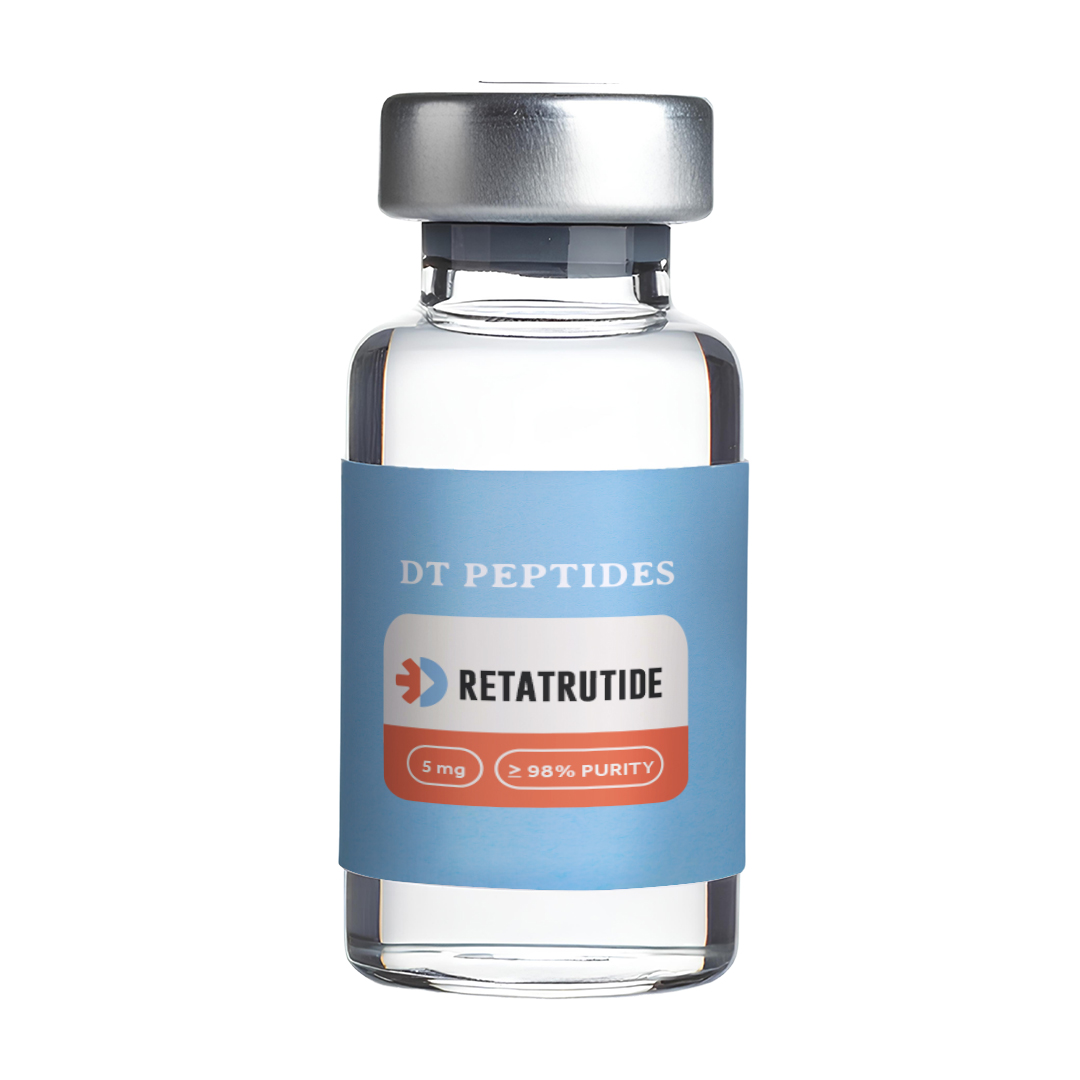
Retatrutide represents a breakthrough in personalized and effective treatment options by addressing multiple pathways involved in energy balance and glucose metabolism. As a multi-receptor agonist, Retatrutide simultaneously targets GLP-1, GIP, and glucagon receptors, enhancing weight loss, improving glucose regulation, and supporting lipid metabolism. Clinical trials have demonstrated its ability to promote substantial and sustained weight loss while reducing hemoglobin A1c levels, showcasing its promise as a comprehensive therapy for individuals struggling with metabolic health challenges.
Retatrutide Overview
Retatrutide is a novel triple receptor agonist peptide developed by Eli Lilly that simultaneously targets the glucagon receptor (GCGR), glucose-dependent insulinotropic polypeptide receptor (GIPR), and glucagon-like peptide-1 receptor (GLP-1R). The peptide’s mechanism of action involves reducing food intake, increasing energy expenditure, and potentially stimulating hepatic fatty acid oxidation while reducing hepatic lipogenesis.
Retatrutide in Weight Loss and Obesity
Retatrutide has shown promising results in clinical trials for weight loss and obesity treatment. In a phase 2 trial involving adults with obesity or overweight, retatrutide demonstrated substantial weight reduction over 48 weeks. Participants receiving the highest dose of retatrutide experienced a mean weight loss of 24.2% of their body weight, equivalent to about 58 pounds [R].
The study also found that retatrutide’s effects on weight loss had not plateaued by the end of the 48-week period, suggesting potential for even greater weight reduction with longer treatment duration. Additionally, all participants in the highest-dose group achieved at least 5% weight loss, with 26% of participants losing 30% or more of their baseline weight [R].
Beyond weight loss, retatrutide showed improvements in various cardiometabolic measures. Participants experienced reductions in waist circumference, blood pressure, triglycerides, and cholesterol levels. Retatrutide also demonstrated positive effects on insulin sensitivity and glycemic control, with nearly three-quarters of prediabetic participants returning to normal blood sugar levels after 48 weeks of treatment [R].
In a substudy focusing on participants with fatty liver disease, retatrutide showed remarkable efficacy in reducing liver fat content. Over 85% of participants taking the higher doses of retatrutide reduced their liver fat to levels below the threshold for fatty liver disease classification. This suggests potential applications for retatrutide in preventing or reversing liver disease associated with obesity [R].
Ongoing phase 3 trials are expected to provide more comprehensive data on retatrutide’s potential as a therapeutic option for obesity and its related complications.
Retatrutide in Type 2 Diabetes
Recent clinical research on retatrutide, a novel triple-hormone receptor agonist, has shown promising results for people with type 2 diabetes. In a phase 2 clinical trial, retatrutide demonstrated significant improvements in glycemic control and substantial weight loss in participants with type 2 diabetes over a 36-week period. The study found that participants taking retatrutide lowered their HbA1c by 1.3% to 2.0%, compared to no change with placebo. Notably, up to 82% of participants achieved an A1C level below 6.5%, and up to 31% reached an A1C level below 5.7%, indicating a potential for normalization of blood glucose levels in some patients [R].
In addition to glycemic improvements, retatrutide showed remarkable effects on body weight. Participants with type 2 diabetes experienced an average weight reduction of 16.9% over the 8-month study period, which is considered the most substantial weight loss reported so far for a medication tested in type 2 diabetes treatment [R].
Clinical trials also revealed that retatrutide treatment led to a reversion to normoglycemia in 72% of participants who had prediabetes at baseline. This finding suggests potential benefits for diabetes prevention or early intervention. Furthermore, retatrutide demonstrated improvements in insulin sensitivity and reductions in low-density lipoprotein cholesterol levels by approximately 20% [R].
These findings support the continued development of retatrutide as a potential treatment option for type 2 diabetes, with ongoing phase 3 trials set to further evaluate its efficacy and safety.
Buy Retatrutide 10 mg — GLP‑1/GIP/Glucagon Tri‑Agonist Peptide, High Purity
Lyophilized 10 mg vial, >99 % purity (HPLC‑MS) and vacuum‑sealed. Store −20 °C dry; 2–8 °C reconstituted; complete work within 28 days. For laboratory research only. Not intended for human or veterinary applications.